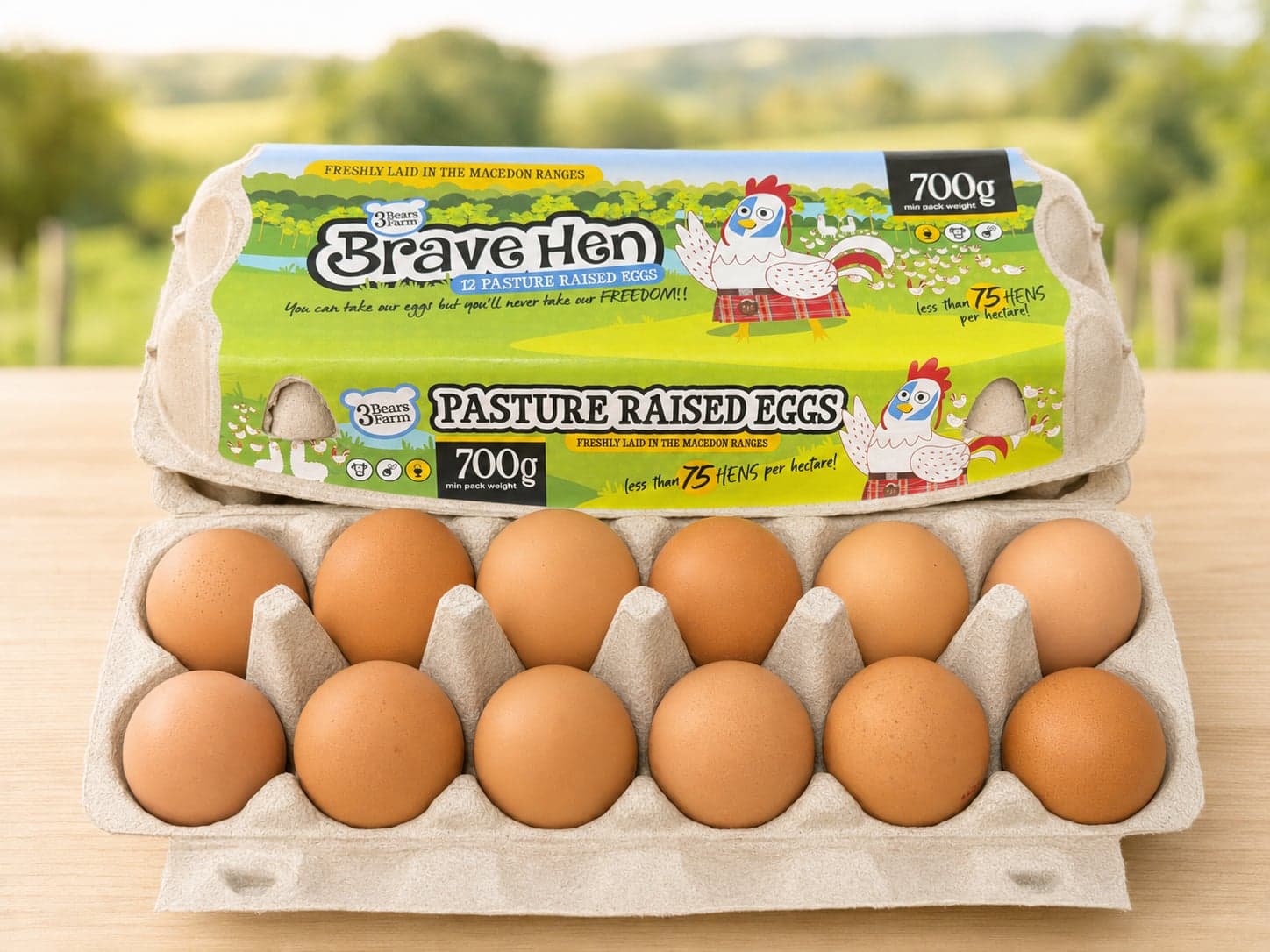
Brave Hen Eggs
“You can take our eggs, but you can never take our freedom.”
Pastured is not ‘free range’
Here at 3 Bears Farm we're on a mission to provide our customers with top quality, ethically produced food — no exception. While many people believe ‘free-range’ is all about hens enjoying a natural life free to roam, the reality is that stocking density dictates the label. Free-range egg farms can keep a maximum of 10,000 laying hens per hectare — that equates to one hen per square metre, and there's nothing particularly free about that!
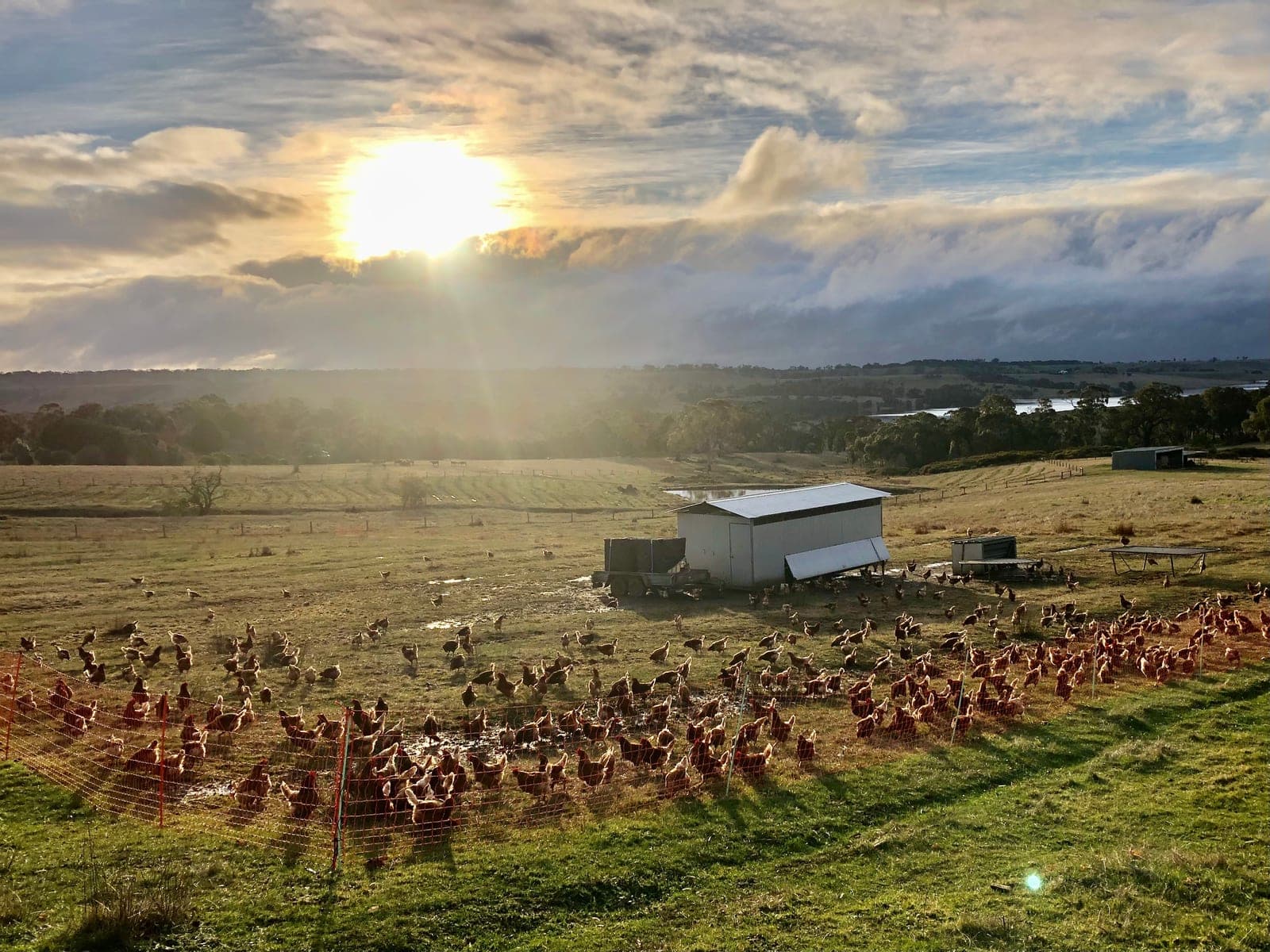
In comparison, pastured egg hens enjoy a maximum stocking density of 1,500 hens per hectare (7 square metres per bird). On 3 Bears Farm our stocking density is lower again — fewer than 75 hens per hectare — and better still, our Brave Hen ladies play a massive role in our regenerative agriculture journey. Their mobile caravans keep moving to fresh ground, so they get new pasture and lots of bugs, and in return they poop all over our paddocks, improving our pasture. A better life for our hens, and tastier, healthier eggs for you… YUM!
How we are influencing egg farming for the better
Fewer than 75 hens per hectare
Australia's 'free range' standard allows up to 10,000 hens per hectare outdoors. Our girls range at fewer than 75 per hectare — that's not a typo, and it's why they actually go outside.
Mobile caravans, moved weekly
Our hens live in mobile caravans that we tow to fresh pasture every week, so there's always new grass, new bugs and new dust-bathing real estate.
Small flocks
Hens are social creatures with a genuine pecking order. Small flocks mean less stress, more natural behaviour and, frankly, happier chooks.
A fresh pasture diet
Grass, seeds, insects and sunshine, topped up with quality feed. You can see the difference in the yolks — deep gold, thanks to all that green feed.
Regenerative rotation behind the cattle
The hens follow our cattle around the farm, scratching through and fertilising each paddock as they go. The pasture gets better every year — the eggs are almost a by-product of soil-building.
Guarded around the clock
Automated caravan doors, solar-powered electric netting, fox lights, and the real muscle: 16 guardian alpacas who take their job extremely seriously.
Retirement, not the chop
When our hens slow down on the laying front, we re-home them as backyard chooks rather than sending them off. Want a few? Register your interest below.
Melbourne-made recycled cartons
Every dozen comes in recycled cartons made right here in Melbourne. Good eggs shouldn't cost the earth.
The science
Many people don't realise that chickens are naturally omnivores — they should be eating bugs, insects and grubs, which in return produces nutrient-rich eggs. Eggs are one of the best sources of protein available: the whites carry the amino acids, while the yolk is rich with vitamins and minerals.
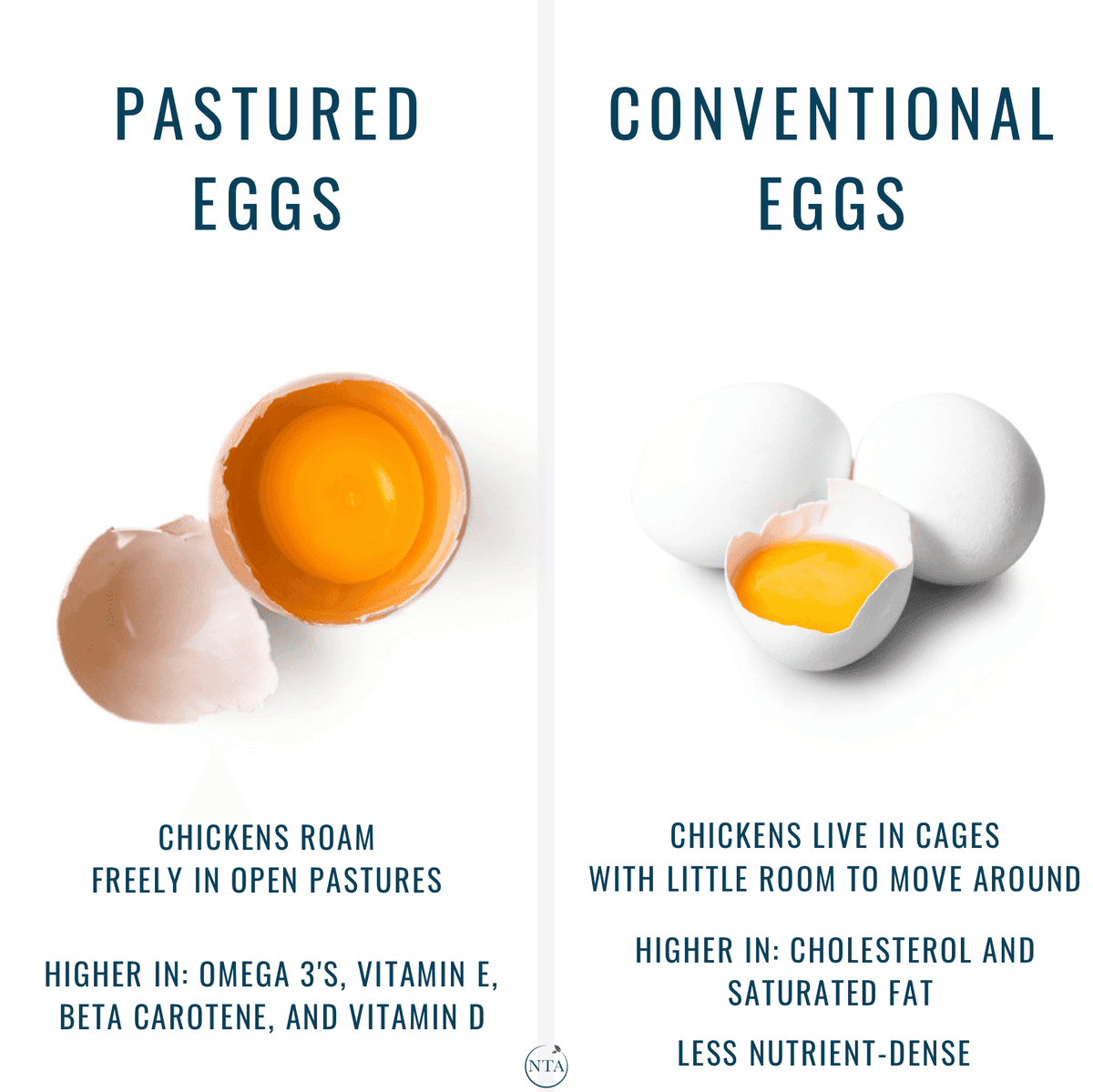
According to the 2007 Mother Earth News egg testing project, conventionally farmed eggs are nutritionally inferior to pastured eggs. Compared with official U.S. Department of Agriculture (USDA) nutrient data for commercial eggs, eggs from hens raised on pasture may contain:
- ⅓ less cholesterol
- ¼ less saturated fat
- ⅔ more vitamin A
- 2 times more omega-3 fatty acids
- 3 times more vitamin E
- 7 times more beta carotene
- 4–6 times more vitamin D
Where to get them
Most of our eggs are spoken for by our wonderful wholesale stockists — which is exactly how a couple of thousand hens stay in business. For farm-gate availability, register your interest and we'll let you know when eggs are up for grabs, or follow the farm on Facebook where specials land first.
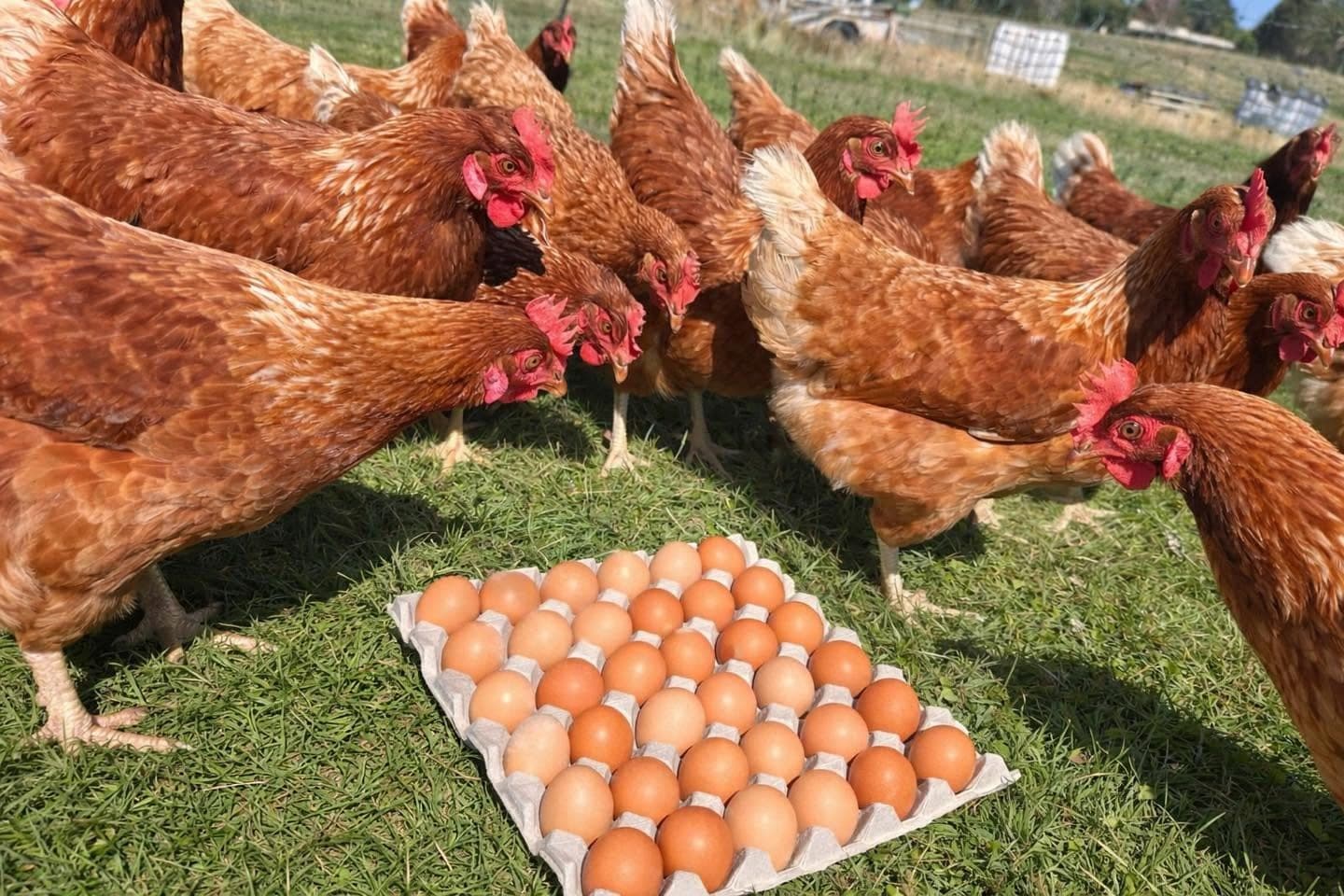
Adopt a retired Brave Hen
A couple of times a year we re-home hens who've finished their commercial laying careers. They still lay — just at a more civilised, semi-retired pace — and they make brilliant backyard chooks: friendly, pasture-raised and fox-savvy. We occasionally have pullets available too.
Register for chicken sales